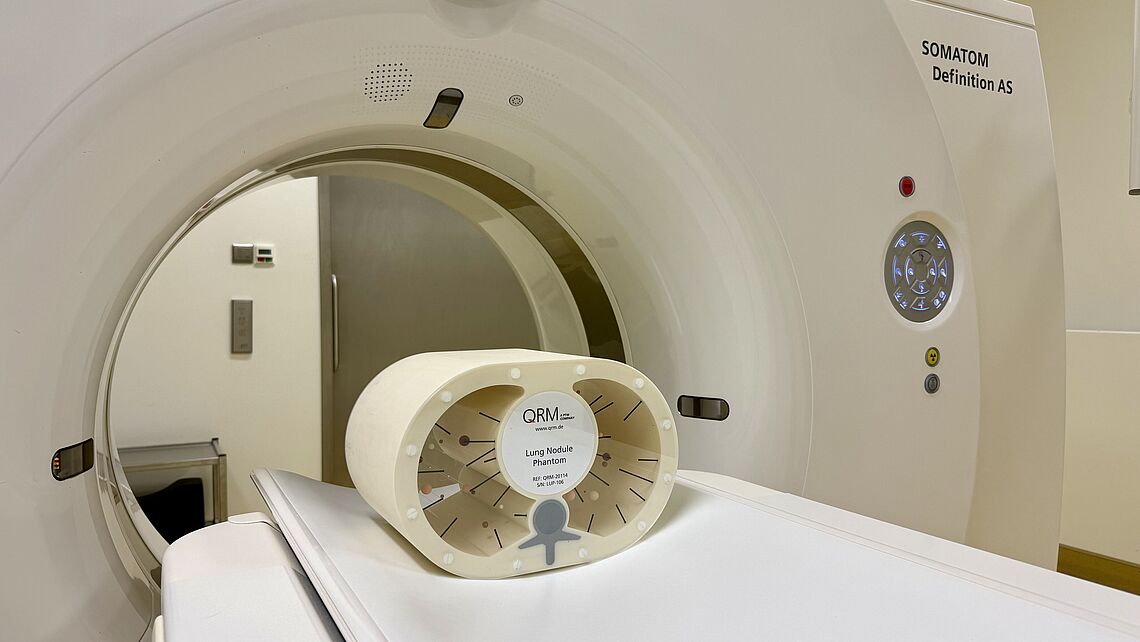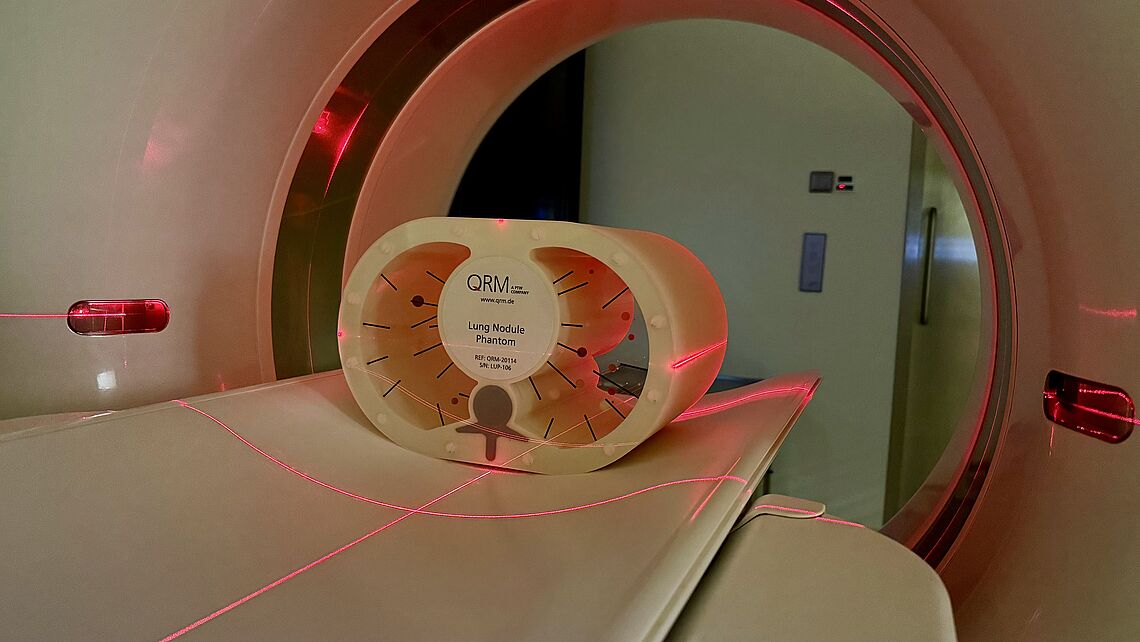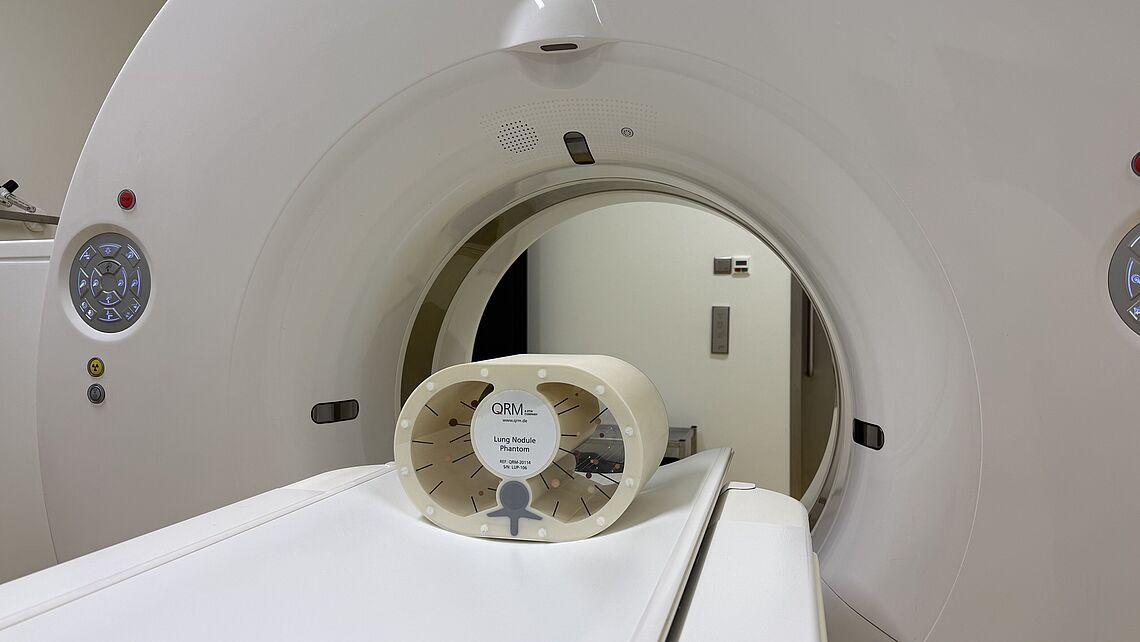
Lung Nodule Phantom

Support rigorous quality control while minimizing patient radiation exposure

Designed to support early lung cancer detection through standardized and realiable quality assurance in low-dose CT (LDCT)

Key Advantages

Realistic Nodule Simulation for LDCT

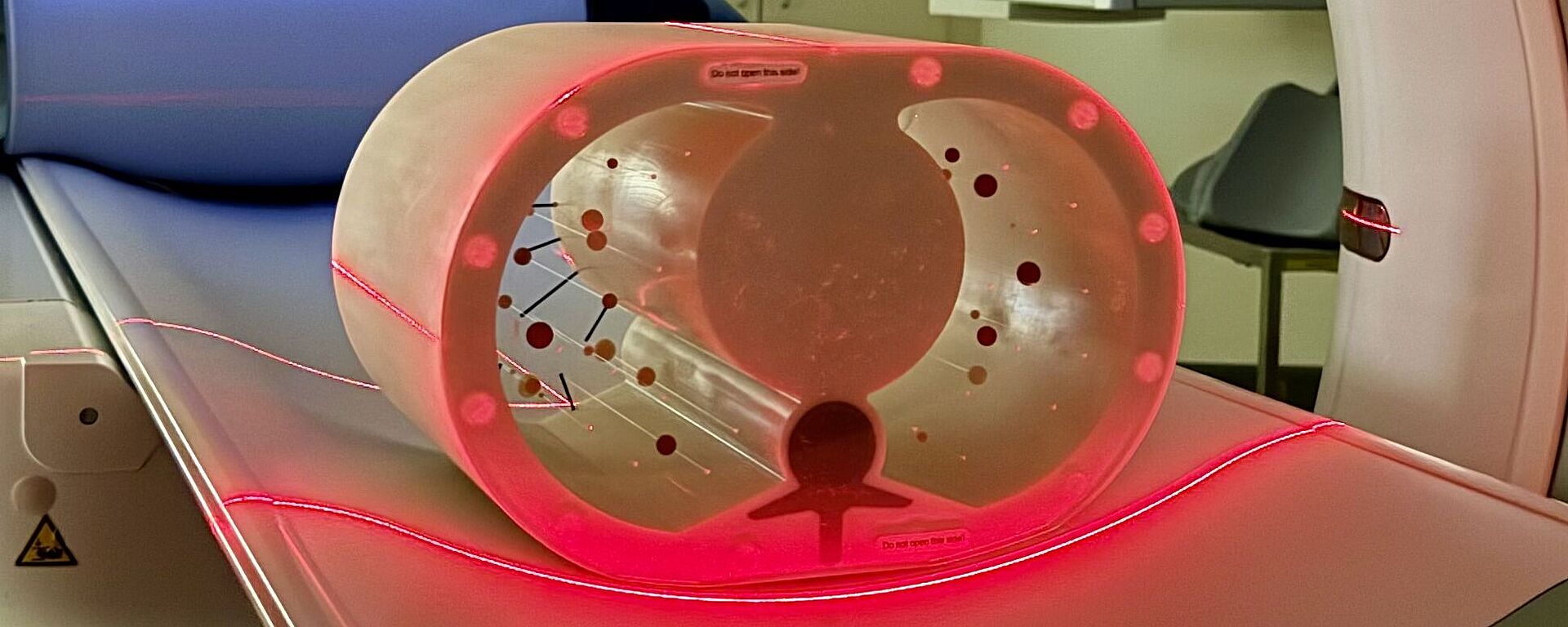
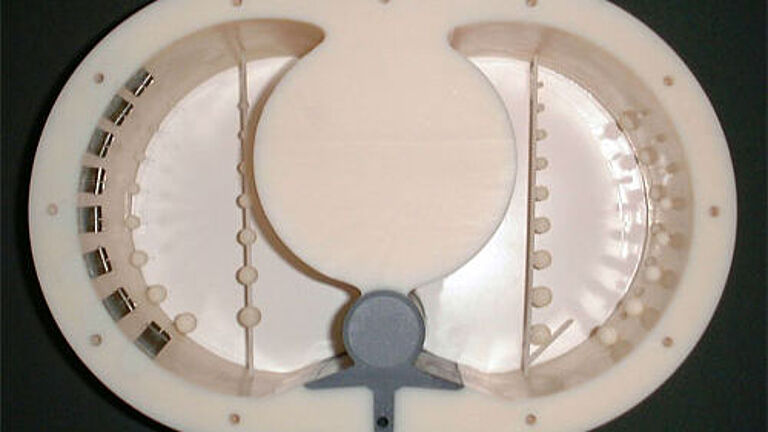
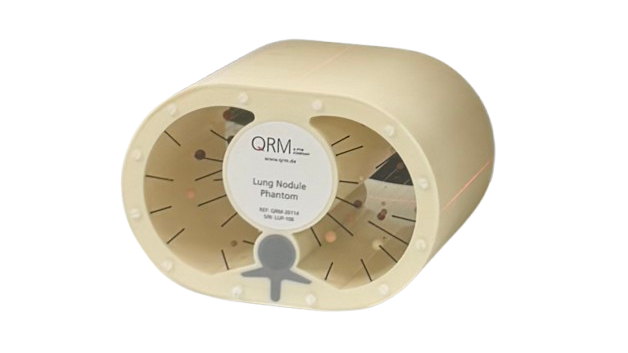
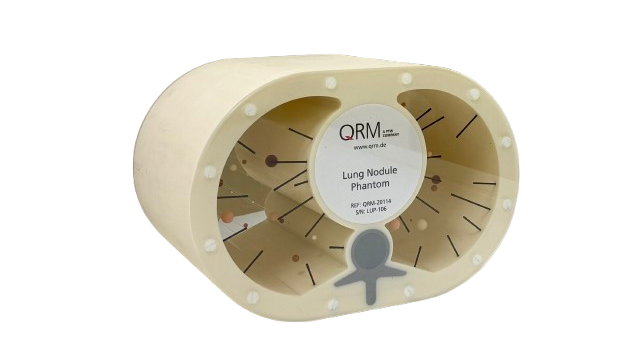
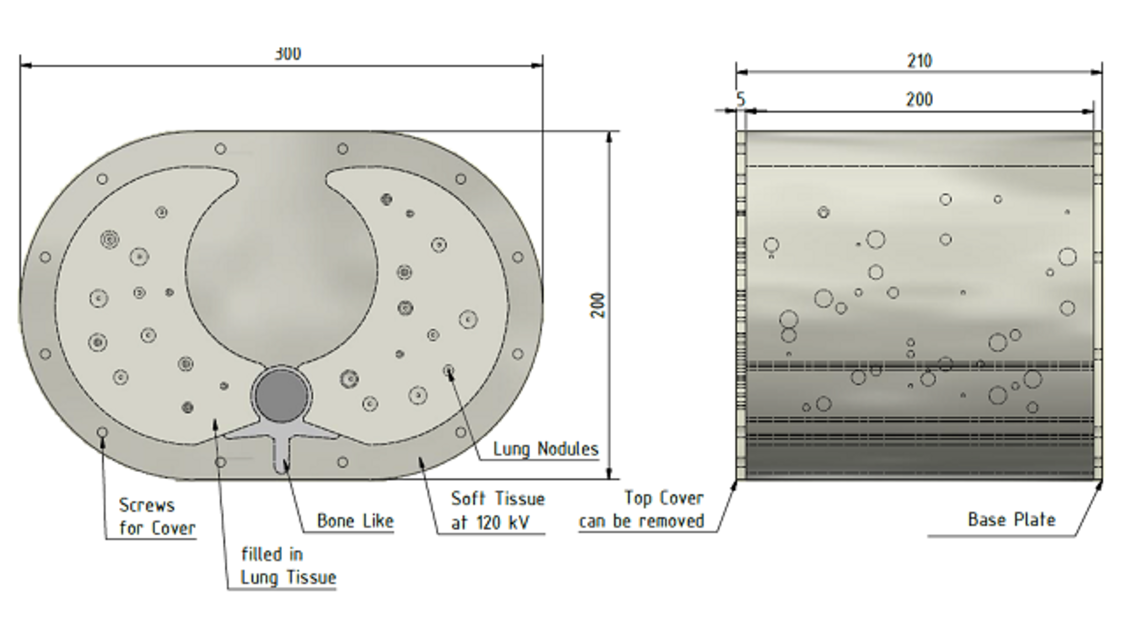
The phantom incorporates spherical nodules of varying sizes and densities distributed throughout both lung lobes. This enables consistent assesment of nodule detectability under realistic imaging conditions, including subtle findings such as ground-glass opacities (GGO).

Anatomically Relevant Design

Designed as a semi-anthropomorphic phantom, it features a bone-equivalent spine with cortical and spongious components embetted in a soft tissue-equivalent body. Users can feel the lung cavities with homogenous and heterogenous lung granulate to adapt the setup to specific qualuty assurance objectives.

Standardized QC for Lung Cancer Screening

Purpose-built for low-dose CT lung cancer screening and clinical quality control programs, the phantom supports reproducible assessment of screening performance across different CT systems and protocols.

Application Benefits

Anthropomorphic Design
Easy to Use
Applications
Anthropomorphic Design

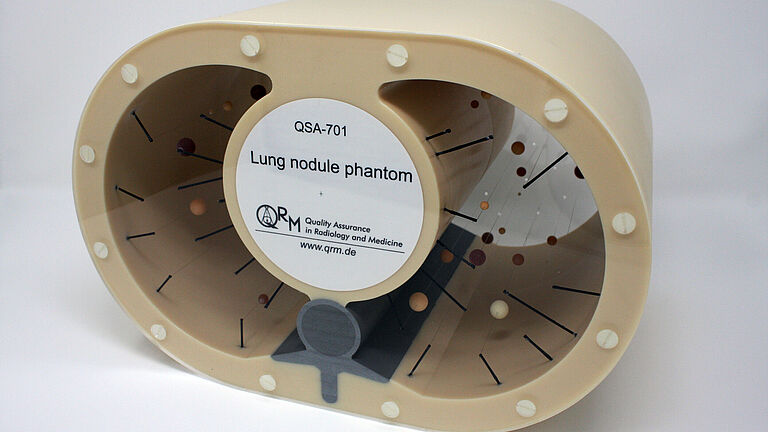
For the realistic results, this phantom is built with lung-equivalent granules, a soft tissue-equivalent body, and a bone-equivalent spine.

Easy to Use
Lung Nodule Phantom

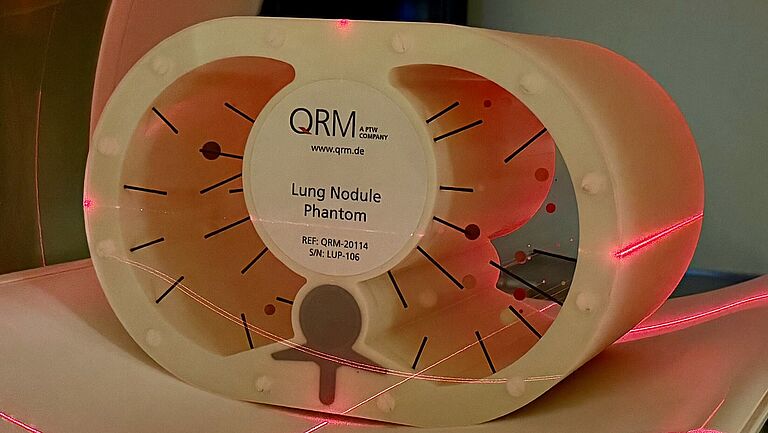
Thanks to its user friendly designed, this phantom makes quality control workflows simple and fast. It can be easily postioned on a couch, without needing extra stands or holders.

Applications

Applications

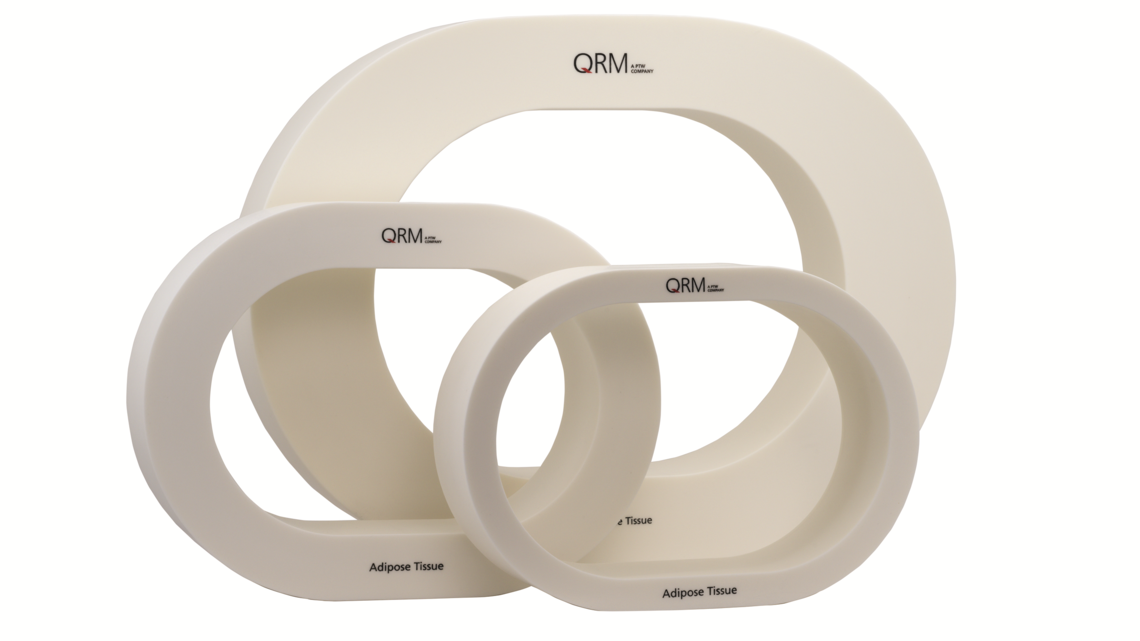
Various sizes of lung-equivalent nodules approx. -900 HU at 120 kV for a comprehensive evaluation. Need to simulate larger patients? Just add the extension rings.

Perfect for thorough QC

Realistic Lung Nodule Simulation for Robust QC Workflows


Multiple spherical nodules of different sizes and densities

The phantom incorporates multiple spherical nodules with varying sizes and densities distributed throughout both lung lobes.

Designed to simulate a broad range of imaging scenarios, including different nodule types and attenuation values such as ground glass opacity. The lung tissue is represented by homogenous lung granulate, which can be filled into the lobes by the user as needed.

(Semi-)anthropomorphic phantom design

To replicate realistic anatomical conditions, the phantom features a bone-equivalent spine with cortical and spongious bone components in a soft tissue-equivalent body.  

Its compact and lightweight design enables easy positioning on the couch and supports efficient integration into routine quality control workflows.


Extension Rings

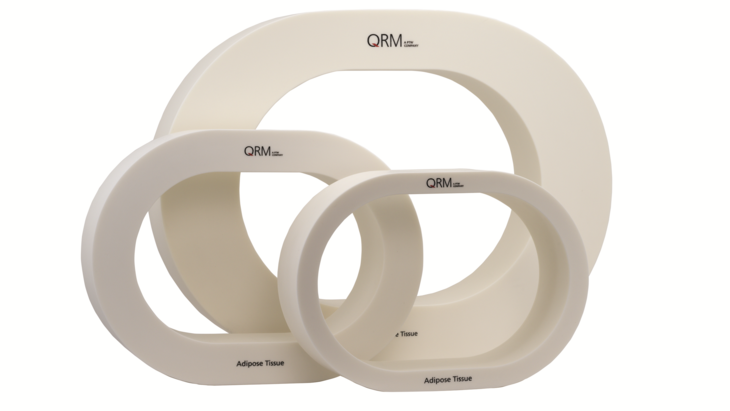
Optional extension rings are available in sizes M, L and XL and can be manufactured from tissue- or fat-equivalent materials. Water-equivalent rings and materials with customized CT numbers (HU) are also available upon request.

For dosimetry applications, a dedicated version with pre-drilled holes is available for radiation dose measurements.


What Medical Physics Experts Say

Featured Articles with Clinical Insights

Technical Specifications

Phantom weight: 3.0 kg
Dimension: 200 mm x 300 mm
Height: 200 mm (210 mm including both cover plates)
Body material: Soft tissue-equivalent (app. 30 HU at 80-140 kV)
Lung-equivalent granules: app. -900 HU (at 120 kV)
Spine: corticalis / spongiosa (bone-like, app. 550 HU / 200 HU at 120 KV)
Nodul size          
Nodule / Diameter 2 mm 4 mm 6 mm 8 mm 10 mm
20 HU 1 2 1 1 1
50 HU 2 1 1 1 1
80 HU 1 1 2 1 2
-650 HU 1 2 1 1 1
-750 HU 1 1 1 2 1
-850 HU 2 1 1 1 1
Nodules with core and shell          
Nodule No Core Shell D Shell D Shell  
1 50 HU -750 HU 2 4  
2 50 HU -750 HU 2 6  
3 50 HU -750 HU 4 8  

Image Gallery

More Information

BROCHURES

WEBINARS

QUESTIONS

Diese Seite existiert auch in Ihrer Sprache.
This page also exists in your language.
Sprache wechseln Change Language